
How January 6 closes the liminal portal of midwinter and illuminates the seeker’s path
For many people, Epiphany (January 6) is one of those dates that hovers quietly in the background of winter…recognized, maybe, but not fully explored.
But spiritually speaking, Epiphany is one of the richest moments of the entire season.
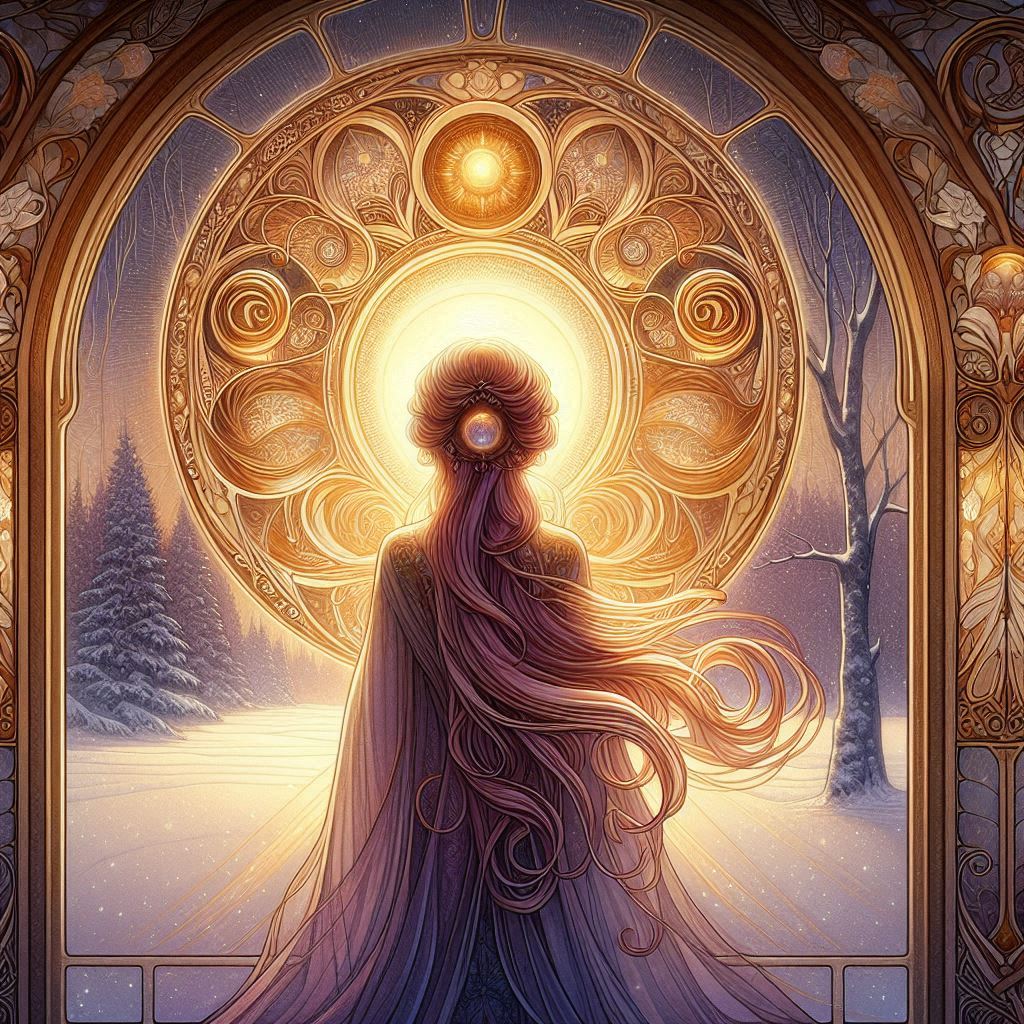
It marks the end of the Twelve Days of Christmas, the soft closing of a liminal threshold stretching from the Winter Solstice through New Year’s, and the arrival of a profound archetype: The revelation of light.
In Christian tradition, Epiphany honors the visit of the Magi. They were mysterious travelers guided by a star, bearing symbolic gifts for the newborn Jesus.
But long before this moment became part of church liturgy, many cultures marked early January as a time of renewal, prophecy, ancestral visitation, and the return of clarity after the darkest nights of the year.
As historian Ronald Hutton notes, midwinter has always been “a hinge of the year,” a boundary time when the seen and unseen draw close and human beings seek meaning in the heavens (Hutton 1996).
Today, we can still experience this season in deeply personal ways. Think of a spiritual “epiphany” as illumination, insight, or the slow dawning of truth…a sense of the veil receding.
It may be a call toward our own inner Magus. That’s the part of us that may follow strange stars and trusts the journey.
This post explores the spiritual meaning of Epiphany, the mystery of Twelfth Night, the Magi as astrologers and seekers, and the archetypal relevance that still lives in this ancient feast.
What You’ll Learn in This Post
- The historical and spiritual meaning of Epiphany
- Why the Twelfth Night is considered a liminal threshold
- About the Magi as astrologers, mystics, and archetypal seekers
- Symbolic interpretations of gold, frankincense, and myrrh
- How “epiphany” functions as a moment of revelation and insight
- Ways to honor Epiphany in a modern, inclusive, non-religious spiritual practice
What Is Epiphany Spiritually?
So, epiphany comes from the Greek epiphaneia. It means manifestation, appearance, or revelation.
In antiquity, the term referred broadly to moments when divine presence became more perceptible in the world.
Over time, it became associated with the Christian story of the Magi, whose arrival symbolized the spiritual truth of light being recognized, honored, and understood.
But beyond religious framing, the concept of epiphany speaks to something universally human:
- The spark of realization
- The sudden alignment of inner knowing
- The moment a path becomes clear
- The recognition of something meaningful emerging from darkness
Philosopher Mircea Eliade observed that rituals marking “manifestation” often function as spiritual reorientations. That’s a way humans recalibrate themselves at cyclical thresholds (Eliade 1959).
Early January is exactly that. It’s a time when many people may feel a shift toward clarity, planning, and visioning after the introspective fog of late December.
Spiritually, Epiphany is the moment when the inner light that was born at the Winter Solstice may become visible enough to follow.
The Twelfth Night: The Final Portal of Midwinter

In many ways, the Twelve Days of Christmas are older than Christianity itself.
Many cultures marked a twelve-day period after the Winter Solstice as a time when the year was “between worlds.”
That meant it was a liminal season when spirits roamed, ancestors visited, or the forces of fate moved through the landscape (Hutton 1996; Frazer 1922).
In Europe, these nights were often associated with divination, omens, blessings for the coming agricultural year, and protective rituals.
Twelfth Night (January 5) is the final threshold of this mystical period. Traditionally, it represented:
- The last night before ordinary time resumed
- A clearing of old energies lingering from the year before
- A moment to banish misfortune or welcome luck
- A symbolic “turning toward the light” after darkness
Folklorist James Frazer described the Twelve Nights as a symbolic microcosm of the year to come, with each night sometimes believed to correspond to a future month (Frazer 1922).
Many people performed small acts of magic, hearth rituals, or blessings for prosperity.
Where Twelfth Night ends, Epiphany begins. It marks the realization or illumination that follows a period of waiting.
Think about it this way: It’s the moment the lights come on.
The Magi: Astrologers, Seekers, and Archetypal Wayfarers

One of the most fascinating elements of Epiphany is the role of the Magi.
In the Gospel of Matthew, they’re described as wise men “from the East.” But historically, the term magos (plural magoi) referred to:
- Practitioners of astrology
- Interpreters of dreams
- Priestly scholars of Persia
- Experts in symbolic or esoteric knowledge
Classical writers such as Herodotus used Magi to describe a priestly caste associated with Zoroastrianism (Herodotus, Histories 1.132).
By the first century CE, Magi were widely recognized as astrologers, which aligns with the idea that they followed a star. It was likely a rare planetary conjunction or astrological omen interpreted as the birth of a great ruler.
The Magi as Archetypal Seekers of Light
Across religious studies and comparative mythology, the Magi are often understood not just as historical figures but as archetypal wayfarers. That means that they were those who:
- Notice subtle signs
- Trust the pull of destiny
- Travel in darkness guided by intuition
- Bring gifts that reflect spiritual understanding
They embody the quest for gnosis. That’s direct knowledge gained through experience, observation, and inner alignment rather than doctrine.
Astrology and the Star
Scholars propose several astronomical events around the likely time frame of Jesus’s birth, including:
- A conjunction of Jupiter and Saturn in Pisces (7 BCE)
- A close grouping of planets (6 BCE)
- The heliacal rising of stars associated with kingship
Whatever the event, the narrative may reflect an ancient truth: People across cultures looked to the sky to help understand what was happening on earth.
By framing the Magi as astrologers, the Epiphany story may honor the human impulse to seek guidance from the cosmos.
The Symbolic Meaning of the Magi’s Gifts

The gifts of the Magi (gold, frankincense, and myrrh) carry layers of meaning that extend far beyond the biblical narrative.
Whether interpreted through folklore, alchemy, botany, or archetypal symbolism, they form a triad of powerful metaphysical correspondences.
Let’s take a look!
Gold: The Light of Consciousness
Gold has long symbolized:
- Sovereignty
- Solar energy
- Enlightenment
- Purity and incorruptibility
- The “higher self” in alchemical traditions
Giving gold is like acknowledging the presence of inner royalty. That’s the divine spark or noble essence within the human heart.
Frankincense: Breath, Prayer, and Rising Awareness
Harvested from the resin of Boswellia trees, frankincense has been used in:
- Temple rituals in Egypt
- Incense offerings in Israel
- Purification rites across the Mediterranean
Symbolically, it may represent:
- Elevation
- Spiritual communication
- The bridging of physical and non-physical realms
In this light, Frankincense is a metaphor for awareness rising like smoke, connecting earth with sky.
Myrrh: Mortality, Healing, and Sacred Transition
Myrrh, resin of Commiphora species, has long been associated with:
- Healing and embalming
- Protection
- Rites of passage
- Honoring the fragility and beauty of mortal life
Its inclusion is a reminder that every spiritual journey involves transformation, endings, and the body’s earthly wisdom.
Together, the three gifts form something of a complete cycle: Illumination (gold), elevation (frankincense), and transformation (myrrh).
Epiphany as a Moment of Revelation

Even removed from religious framing, Epiphany may symbolize the experience of a spiritual realization dawning after a period of darkness or gestation.
I mean, think of the rhythm of late December:
- The introspection of the Winter Solstice
- The emotional layers of the holidays
- The release of the old year
- The quiet pause of early January
By January 6, many people start to feel a shift. It could show up as a softer sense of direction, a return of clarity, or a spark of purpose, among other things.
This is the essence of epiphany. It’s a revelation that doesn’t necessarily explode into being but unfolds gently, like morning light returning to winter fields.
Take a deep dive into The Meaning of the Winter Solstice (Yule): The Magic of the Longest Night.
The Third Eye and Inner Vision
Many contemporary spiritual practitioners associate Epiphany with the third eye, intuition, or inner sight.
This mirrors the symbolism of the Magi who “saw clearly” what others could not.
Anthropologist Victor Turner wrote about liminality as a time during which “new perspectives become possible” (Turner 1969).
Epiphany may often feel like this. Like an internal click or shift that occurs after a boundary-crossing ritual season.
Revelation often arises not from force, but from openness.
Twelfth Night Lore and Midwinter Magic

Throughout Europe, Twelfth Night carried a spectrum of magical traditions that reflected the belief that midwinter was spiritually charged.
Examples include:
- Wassailing apple orchards for a prosperous harvest (England)
- House blessings using incense or evergreen boughs
- Burning leftover greenery to release stagnant energy
- Fortune-telling for the year ahead
- Feasting, masquerades, and playful reversals (the “Feast of Fools” in medieval France, though not always directly tied to Epiphany)
Scholars such as Christina Hole note that Twelfth Night acted as something of a “ritual reset,” clearing out the last threads of the old year and preparing the home for new blessings (Hole 1958).
In many regions, this night marked the last moment when spirits or ancestors were believed to roam. Epiphany sealed the doorway.
Try your hand at Cozy Divination: Winter Tarot Rituals for Reflection, Rest, and Soulful Insight
The Return to Ordinary Time
Liturgically, Epiphany ends the extended ritual season that begins in late Advent. But spiritually, it also marks a return to ordinary magic, meaning the daily sacredness after the heightened energy of the holidays.
Where December invites dreams, Epiphany invites direction.
Explore: What Are the 12 Days of Christmas, Really? Pagan Roots, Christian Meaning, and Hidden Symbolism
The Journey of the Magi as a Spiritual Path

From a metaphysical perspective, the story of the Magi may mirror the journey of the soul:
- Perceiving a sign (intuition or calling)
- Choosing to follow it (courage)
- Traveling through darkness (the unknown)
- Arriving at a moment of recognition (epiphany)
- Offering gifts (integration or gratitude)
- Returning by another road (transformation)
The line about the Magi “returning home by another way” (Matthew 2:12) has been interpreted symbolically by Christian mystics and secular scholars alike. That the seeker does not walk back the same person.
This journey mirrors the rhythm of inner work many people experience during the liminal weeks between the Winter Solstice and early January.
When you look at it in this light, Epiphany is the arrival point. And also the beginning of a new path.
Modern Ways to Honor Epiphany

You don’t need to be Christian (or really, religious at all) to engage with the symbolism of Epiphany.
These practices work well with universal themes of revelation, clarity, and returning light.
1. A Candle for Illumination
Light a single candle on January 6 and spend a few moments noticing what truth or clarity is gently emerging within you.
Ask: What is becoming visible?
2. Follow Your “Star”
Choose a symbol, word, or intuitive feeling that you want to follow into the new year. Let it guide small daily choices.
3. Offer Your Own Three Gifts
Write down three qualities you want to cultivate (one for each gift of the Magi). For example:
- Gold: Self-worth
- Frankincense: Clarity
- Myrrh: Healing or acceptance
4. Bless Your Home
Use gentle, smoke-free methods if preferred: simmer pots, essential-oil diffusers, evergreen bundles, or even spoken blessings.
Learn more about Working with Sacred Smoke: Mugwort, Myrrh, Tobacco, and Frankincense for Protection and Vision.
5. Journaling Prompt: “What truth is revealing itself now?”
Let Epiphany act as a mirror.
6. A Small Pilgrimage
Take a walk in nature. You could see it as your modern version of following a star. Notice what stands out, and what draws you forward.
7. Closing the Liminal Season
Try using Epiphany as a symbolic “seal” on your winter rituals. For example, you might:
- Tidy up your altar
- Thank your ancestors
- Put away holiday items with intention
- Choose a guiding theme for the next six weeks of winter
This honors the transition from the mystical glow of the holidays to the clearer, steadier energy of midwinter.
Why Epiphany Still Matters Today
Even in a modern world where lights are artificial and calendars are digital, many folks may still sense the quiet significance of early January.
Epiphany represents:
- The beginning of the return to clarity
- The shift from dreaming to direction
- The recognition of what matters most
- The moment where inner truth may become visible
It carries the same archetypal pattern found in myths, journeys, and spiritual traditions across the world. That means
darkness → revelation → integration → new beginning.
That may be why Epiphany is experiencing a gentle renaissance in contemporary spirituality.
It offers a structure for understanding the seasonal energies of early January. It’s something ancient, archetypal, and deeply human.
The Light That Finds You on the Twelfth Night

As the Twelve Days end and the new year begins to settle its bones, Epiphany functions as a lantern held up to the inner landscape.
It doesn’t demand certainty. It may simply illuminates what’s ready to be seen.
Whether you honor the Magi, the star, the Solstice light, or the gentle turning of the season, Epiphany invites you to recognize your own revelation. That’s whatever truth has been quietly rising within you.
And like the Magi, once you see the light, even faintly, you may find you are ready to follow it.
References
- Eliade, Mircea. The Sacred and the Profane. Harcourt, 1959.
- Frazer, James. The Golden Bough. Macmillan, 1922.
- Herodotus. Histories. 5th century BCE.
- Hole, Christina. A Dictionary of British Folk Customs. Paladin, 1958.
- Hutton, Ronald. The Stations of the Sun: A History of the Ritual Year in Britain. Oxford University Press, 1996.
- Turner, Victor. The Ritual Process: Structure and Anti-Structure. Aldine, 1969.
- Zoroastrian scholar references re: Magi priesthood (Boyce, Mary. Zoroastrians: Their Religious Beliefs and Practices. Routledge, 1979).
- Astronomical analyses of the “Star of Bethlehem” (Molnar, Michael R. The Star of Bethlehem: The Legacy of the Magi. Rutgers University Press, 1999).
Disclaimer
This article explores historical, cultural, folkloric, and spiritual themes for educational purposes only. It is not intended to diagnose, treat, or prescribe for any physical, emotional, or spiritual condition. Interpretations of symbolism, ritual, or spirituality are highly individual—use your own discernment and follow what feels aligned for you. If you have mental, emotional, or physical health concerns, please seek support from a qualified professional.